Extended General Colloquium in Honor of Jan van Mill's 65th birthday
Speakers: K.P. Hart (TU Delft) and Jan van Mill (KdVI)
Event details from: Extended General Colloquium in Honor of Jan van Mill's 65th birthday
- Date
- 5 October 2016
- Time
- 15:30 – 17:45
Programme:
15:30-16:00: tea & cake
16:00-16:45: K.P. Hart (TU Delft)
16:45-17:30: Jan van Mill (KdVI, UvA)
17:30-17:45: Question time
Abstracts
Abstract K.P. Hart: The Katowice Problem
An elementary exercise: assume there is a bijection between two sets X and Y, construct a bijection between their power sets.
Another elementary exercise: assume there is a bijection between the power sets of the sets X and Y, construct a bijection between the sets themselves.
The first exercise is easy; the second is really, really hard, impossible even --- this will be explained.
The second exercise becomes doable if one assumes the bijection is an isomorphism with respect to the partial order of inclusion.
The Katowice Problem takes this one step further. Take two infinite sets X and Y and their power sets 2^X and 2^Y; these are Boolean rings under the operations of symmetric difference and intersection. Now assume the quotient rings of the power sets by the ideal of finite sets are isomorphic. Must there be a bijection between X and Y?
This problem is solved for all but one pair of infinite sets. The solution and the attacks on the remaining pair involve non-trivial set theory and I will discuss the current state of affairs and also how this problem can be formulated functional-analytically and topologically.
Abstract Jan van Mill: A short proof of Torunczyk’s characterization theorems
We will discuss Torunczyk’s topological characterization results of infinite-dimensional manifolds. These theorems are widely known and the techniques used were applied in diverse settings. They enable one to give short proofs of many topological classification results.
Recently, Dijkstra, Levin and van Mill found a new approach to Torunczyk's theorems. While the previously published proofs used the geometry of concrete model spaces, the focus of the new approach is abstract and on the existence of very strong so-called homogeneity properties. This results in considerable simplifications and in new insights. Some details of the proof will be presented.
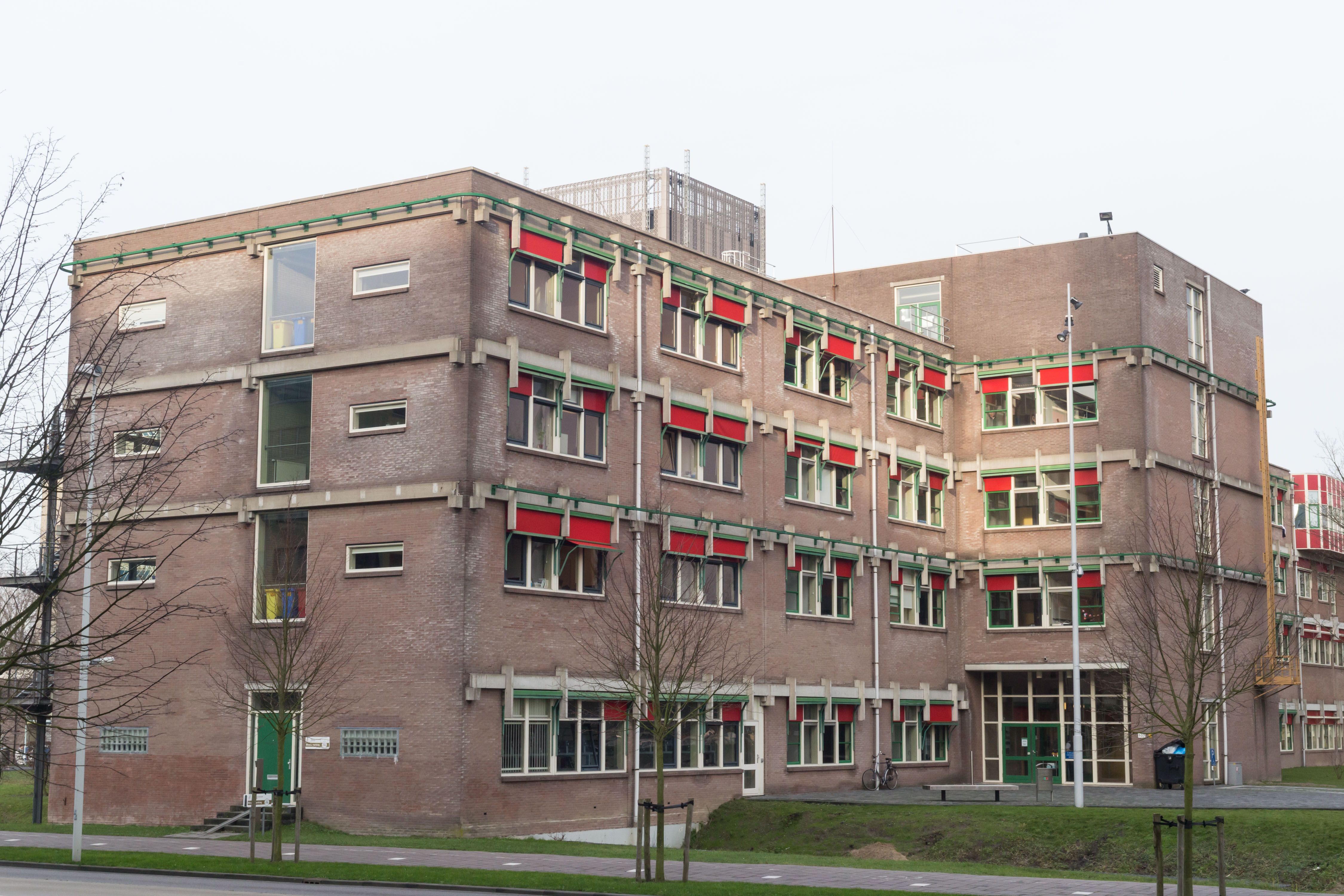
Location: KdVI meeting room, Science Park 107, F3.20